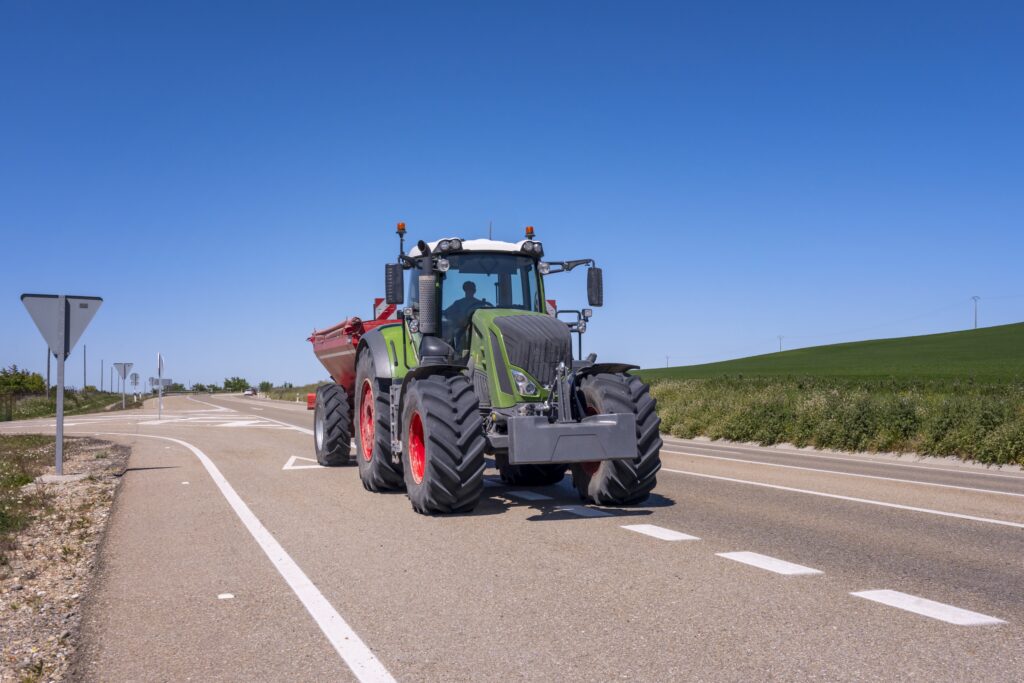
If you've ever rounded a curve on an Idaho highway and suddenly found yourself face-to-face with a slow-moving tractor, you know how quickly that situation can feel dangerous. Farm equipment on public roads is a regular part of life in Idaho, but most drivers have no idea what the rules actually are, who has the right of way, or what to do if something goes wrong.
At Litster Frost, we work with Idaho drivers who've been hurt in exactly these kinds of crashes. Whether the accident happened on a rural two-lane road or a busy state highway, our team can help you understand your rights, navigate the insurance process, and pursue the compensation you deserve. If you have questions after reading, give us a call at (208) 333-3366.
Are Farm Equipment Vehicles Allowed on Idaho Highways?
The short answer is yes. In Idaho, farm equipment is legally permitted to travel on public roads and highways, including state highways, as long as the operator follows the applicable rules. This includes tractors, combines, hay balers, grain carts, and other oversized agricultural machinery.
When and Where Farm Equipment Can Legally Operate
Farm vehicles in Idaho can operate on public roads when they are traveling between fields, moving to and from storage, or conducting other agricultural work. There are, however, some limitations:
- Farm equipment is generally not permitted on interstate highways
- Operators must comply with width and load restrictions
- Travel during low-visibility conditions, such as at night or in fog, requires additional lighting and precautions
- Local ordinances in some counties may impose additional restrictions
During planting and harvest seasons, typically spring and fall, the frequency of farm equipment on Idaho roads increases significantly. This is when drivers need to be especially alert.
Right-of-Way Rules for Farm Equipment
One of the most common points of confusion for Idaho drivers is who actually has the right of way when farm equipment is involved.
Who Yields and When
Farm equipment does not automatically have the right of way simply because it is large or slow. Standard traffic laws apply. However, there are practical realities that drivers need to understand:
- A farm vehicle traveling in a lane has the right to be there, just like any other vehicle
- If a tractor is moving slowly and traffic is building behind it, the operator may pull to the right when it is safe to allow vehicles to pass, but they are not always legally required to do so
- Drivers approaching from behind are responsible for slowing down and waiting for a safe opportunity to pass
- Operators turning left into a field may slow dramatically and without much warning, which is a common cause of rear-end collisions
The bottom line: just because you can see the equipment ahead does not mean it is safe to pass. Patience matters here.
Understanding Slow-Moving Vehicle Laws in Idaho
Idaho law requires slow-moving vehicles, including farm equipment, to display a specific emblem when traveling on public roads.
Required Signage and Visibility Standards
The slow-moving vehicle (SMV) emblem is a fluorescent orange-red triangle with a reflective border. Under Idaho Code, any vehicle traveling at speeds below 25 mph on a public roadway is required to display this emblem on the rear of the vehicle. For farm equipment, this requirement also extends to:
- Rear-facing amber or red lights during low-light conditions
- Headlights and taillights when operating at dusk, dawn, or night
- Flashing or hazard lights in some situations when the equipment is particularly wide or slow
If a piece of farm equipment is on the road without proper markings or lighting, that failure can become an important factor in determining fault after an accident.
How to Safely Pass Farm Equipment on the Road
Passing a slow-moving tractor or combine on a rural Idaho highway is one of those moments where poor judgment can have serious consequences.
Common Mistakes Drivers Make
Even experienced drivers make errors around farm equipment. Here are the most important things to keep in mind:
- Never pass on a curve or hill. You need a clear line of sight well ahead of the equipment and in the oncoming lane.
- Watch for left turns. An operator slowing to turn into a field may drift toward the center line, which can look like an invitation to pass on the right. It is not.
- Do not tailgate. Farm equipment can stop or turn unexpectedly. Keeping a safe following distance gives you time to react.
- Wait for a designated passing zone. Pass only where it is legally permitted, with sufficient visibility in both directions.
- Account for equipment width. Many pieces of farm equipment extend beyond the edge of the lane, sometimes significantly.
Rushing to get past farm equipment is one of the leading causes of serious accidents on Idaho rural roads.
Common Causes of Accidents Involving Farm Equipment
Car accidents involving farm equipment tend to follow predictable patterns. Understanding them can help you avoid becoming a statistic.
Visibility Issues, Speed Differences, and Driver Error
The most common contributing factors include:
- Speed differential: A vehicle traveling 60 mph approaches a tractor moving at 15 mph much faster than drivers expect
- Blind spots: Farm equipment has significant blind spots, and operators may not see vehicles approaching quickly from behind
- Inadequate lighting or missing SMV emblems on older equipment
- Dust, debris, or road conditions that reduce visibility around operating equipment
- Drivers misjudging the width of equipment when attempting to pass
- Distracted driving, including cell phone use, which reduces reaction time in fast-developing situations
Many of these accidents happen in the few seconds between when a driver spots the equipment and when a decision needs to be made.
What to Do After an Accident With Farm Equipment
If you are involved in a collision with farm equipment on an Idaho road, the steps you take immediately afterward matter for both your safety and any future legal claim.
Steps to Protect Your Safety and Your Claim
- Check for injuries and call 911. Even if damage seems minor, a police report creates an official record of the incident.
- Do not move vehicles unless they are creating a safety hazard.
- Document the scene. Take photos of both vehicles, the road, any signage (or the lack of it), skid marks, and the surrounding environment.
- Get the operator's information. Name, contact information, insurance, and the name of the farm or employer if applicable.
- Talk to witnesses. Anyone who saw what happened may be valuable to your case later.
- Seek medical attention. Even if you feel okay, some injuries do not show symptoms immediately.
- Avoid giving recorded statements to insurance adjusters before speaking with an attorney.
- Speak with an attorney with Lister Frost by calling (208) 333-3366.
Knowing how to deal with insurance companies after a car accident in Idaho before, during, and after speaking with your attorney is extremely important to making sure you do not accidentally say something that could affect the outcome of your claim.
How Liability Is Determined in Farm Equipment Accidents
Fault in a farm equipment accident is not always straightforward. Both the driver and the equipment operator can bear some degree of responsibility.
Driver Responsibility vs. Equipment Operator Responsibility
Idaho follows a comparative fault system, which means liability can be shared between multiple parties. Relevant questions in these cases include:
- Was the farm equipment properly marked with an SMV emblem and required lighting?
- Was the equipment traveling legally on that road?
- Did the driver have adequate time and visibility to respond?
- Was the driver following too closely, speeding, or distracted?
- Did the operator signal or give any warning before turning?
If an equipment operator was negligent, such as operating without required safety markings, that negligence may shift a significant portion of fault onto them or their employer. Working with an attorney helps ensure that all of these factors are properly investigated.
If your accident occurred near the Treasure Valley, our Meridian injury attorneys are familiar with the roads, the rural driving conditions, and the local court system.
When to Call an Idaho Personal Injury Lawyer
Not every fender-bender requires an attorney. But when farm equipment is involved, the stakes are often higher. These vehicles are large, heavy, and unforgiving in a collision. Injuries can be severe, and questions of liability can get complicated quickly.
How Litster Frost Can Help You After a Crash
At Litster Frost, we help Idaho drivers understand their rights after accidents on rural roads and state and Interstate highways like I-84. We know what it takes to secure compensation for our clients for a wide variety of accidents. If you've been hurt in a crash involving a tractor or other farm equipment, we can:
- Review the facts of your accident and explain your legal options
- Investigate whether the equipment was properly marked and legally operated
- Handle communications with insurance companies on your behalf
- Pursue compensation for medical bills, lost wages, pain and suffering, and other damages
You should not have to figure this out alone, especially while recovering from an injury. When you're ready to talk, contact Litster Frost at (208) 333-3366. We're here to listen, answer your questions, and help you figure out your next step.