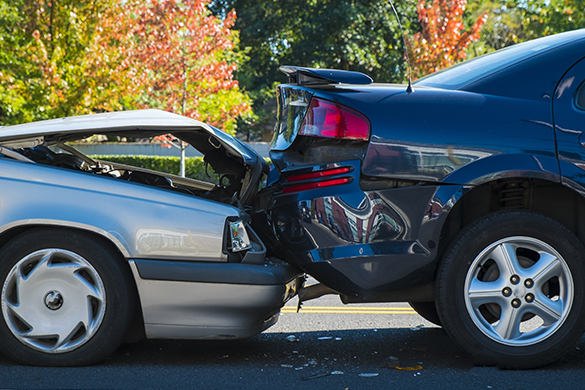
Car accidents can turn your life upside down fast. Pain, medical bills, missed work, vehicle damage, and insurance calls often hit all at once.
If you were injured in a crash in Boise, you do not have to figure out the claim process alone. Litster Frost Injury Lawyers helps injured Idahoans understand their options, deal with insurance companies, and pursue compensation for the harm a negligent driver caused.
Whether your collision happened on Fairview Avenue, I-84 near the Connector, or at an intersection in Boise or the Treasure Valley, our goal is straightforward: give you clear answers and take the legal burden off your shoulders while you focus on recovering.
Got Hit? Call Lit. Contact us at (208) 333-3366 for a free case review.
Why Injured Idahoans Turn To Litster Frost After A Crash
A car wreck is rarely just about fixing the vehicle. It can affect your physical health, ability to work, finances, family, and daily routine.
Our attorneys investigate what caused the crash, preserve evidence, communicate with insurers, document your losses, and evaluate whether a settlement fairly accounts for what the collision has cost you.
As a Boise personal injury attorney, Litster Frost also handles serious injury claims that extend beyond ordinary vehicle damage or short-term medical treatment.
No Fee Unless We Win Your Case
You should not have to add another immediate expense to the bills already arriving after a collision.
Litster Frost handles qualifying personal injury cases on a contingency-fee basis, meaning attorney fees are tied to obtaining a recovery for you.
Types Of Auto Accidents Our Boise Attorneys Handle
Some crashes involve two passenger cars. Others require investigation of a trucking company, rideshare policy, commercial vehicle, impaired driver, or multiple responsible parties.
Car Accidents And Multi-Vehicle Collisions
Passenger-vehicle crashes can result from distraction, speeding, following too closely, unsafe lane changes, failure to yield, impaired driving, or other careless conduct.
Multi-vehicle collisions can be especially difficult because drivers and insurers may disagree about who caused the first impact and whether later impacts contributed to the injuries.
Our team investigates the sequence of events rather than relying only on an insurer's early assessment of fault.
Truck And Commercial Vehicle Accidents
A collision involving a semi-truck or other commercial vehicle may require evidence that would not exist in an ordinary car crash. Driver records, maintenance documents, electronic data, company policies, cargo information, and commercial insurance may all become relevant.
Motorcycle Accident Claims
Motorcyclists have far less physical protection than occupants of passenger vehicles, so even a collision at a relatively modest speed can cause serious injuries.
Drivers who fail to see a motorcycle, make an unsafe turn, change lanes without checking, or follow too closely may cause devastating crashes.
Pedestrian Accidents In Boise And The Treasure Valley
A pedestrian has no vehicle frame, airbag, or seat belt to absorb the force of a collision.
Pedestrian claims often require careful analysis of crosswalks, right-of-way rules, vehicle speed, visibility, traffic signals, and witness or surveillance evidence.
Bicycle Accident Injuries
A driver who overlooks a cyclist, passes without sufficient space, opens a door into a rider's path, or violates the cyclist's right of way may cause life-changing injuries.
Because bicycle crashes can raise different liability and injury questions than ordinary car collisions, it is crucial to speak with an attorney as soon as possible to avoid costly mistakes early in your case.
Rideshare Accidents Involving Uber And Lyft
Uber and Lyft crashes can involve insurance questions that depend on what the rideshare driver was doing when the collision occurred. The driver's personal policy, rideshare coverage, and another motorist's insurance may need to be reviewed.
Drunk Driving And Hit-And-Run Accidents
An impaired driver can create both criminal and civil consequences, but an injured person's compensation claim is separate from the criminal prosecution.
Litster Frost investigates available insurance, evidence of impairment, the driver's actions, and other potential sources of recovery. Learn more about working with a drunk driving accident lawyer after an impaired-driving crash.
When a driver leaves the scene, identifying available insurance can become more complicated. Our guide to hit-and-run accidents in Boise explains the additional issues these claims may involve.
Rear-End Collisions
Rear-end collisions often happen because of distraction, following too closely, or a driver's failure to react to slowing traffic.
Even when vehicle damage looks modest, occupants may suffer neck, back, head, or other injuries. Fault should still be evaluated from the evidence rather than assumed solely from the location of the impact.
Head-On Collisions
Head-on crashes can cause catastrophic injuries because the force of two vehicles may combine in a direct impact.
Investigations may focus on impairment, distraction, unsafe passing, lane departure, road conditions, or another reason a vehicle crossed into opposing traffic.
What To Do After A Car Accident In Boise
The minutes and days after a collision can feel chaotic. You do not need to build a legal case at the roadside, but a few practical steps can protect both your health and the information needed later.
Steps To Protect Your Health And Your Claim
If you can do so safely:
- Move out of immediate danger and check for injuries.
- Call law enforcement when the crash meets Idaho's reporting requirements or when emergency assistance is needed.
- Exchange names, contact information, vehicle information, and insurance details.
- Photograph the vehicles, damage, roadway, traffic controls, skid marks, debris, and visible injuries.
- Obtain names and contact information for witnesses.
- Seek appropriate medical care.
- Keep copies of bills, medical records, repair documents, and insurance correspondence.
Symptoms may also appear after the initial adrenaline of a crash wears off. Headaches, dizziness, neck pain, and other symptoms should not be ignored merely because you felt relatively normal at the scene.
Common Mistakes That Hurt Your Case
Some mistakes happen because accident victims are trying to be cooperative or get the claim over with quickly.
Potential problems can include admitting fault before all facts are known, speculating about what happened, giving an unnecessary detailed recorded statement to the other driver's insurer, signing a broad release too early, ignoring medical symptoms, or failing to preserve photographs and records.
The safest approach is to be accurate. Do not exaggerate your injuries, but do not minimize symptoms you are actually experiencing.
Idaho's Car Crash Reporting Requirements
Idaho Code § 49-1305 currently requires immediate notice to law enforcement when a collision causes injury or death or causes more than $1,500 in damage to the property of any one person. Within a city, notice generally goes to the local police department; otherwise, the statute directs notice to the county sheriff or nearest state police office.
How Insurance Companies Try To Minimize Your Claim
Insurance adjusters may sound helpful because handling claims is their job. But an insurer evaluating a claim against its policyholder also has a financial interest in controlling what it pays.
Understanding that distinction can help you communicate carefully.
Common Tactics Idaho Insurers Use
An insurer may dispute whether its driver was entirely responsible, argue that your injuries existed before the crash, question whether treatment was necessary, point to a gap in medical care, or argue that relatively minor vehicle damage means you could not have been seriously injured.
It may also request extensive medical records or ask for a detailed statement before you know the full extent of your symptoms.
None of those issues automatically determines the outcome. Medical evidence, crash evidence, witness testimony, and other records can provide a fuller picture.
Why You Shouldn't Accept The First Offer
An early settlement can be tempting when medical bills, lost income, and vehicle expenses are piling up.
The problem is that a quick offer may arrive before you understand whether you need additional treatment, how long you may be unable to work, or whether an injury will create ongoing limitations.
Once a claim is fully and finally settled, you generally cannot return later simply because the injuries proved more serious than expected.
Recorded Statements And Why To Avoid Them
The other driver's insurer may ask you to describe the collision, your speed, your injuries, or what you could have done differently. You should not guess about details you do not remember.
You may have contractual obligations to cooperate with your own insurer, so avoid a blanket rule that you should “never” give a recorded statement. Instead, consider getting legal advice before providing a detailed statement where fault or injuries are disputed.
Types Of Compensation Available In Idaho
Depending on the facts and applicable law, an injury claim may seek compensation for losses such as:
- Medical expenses
- Future medical needs supported by evidence
- Lost wages or income
- Reduced future earning capacity
- Vehicle repair or replacement
- Towing and certain other out-of-pocket costs
- Pain and suffering
- Emotional distress
- Loss of enjoyment of life
Idaho law can limit certain categories of damages in particular cases. Any discussion of a specific cap, punitive damages, government defendants, or wrongful death damages should be reviewed against the law applicable on the date of the crash.
Factors That Increase Or Decrease Case Value
Factors that may affect value include the seriousness of the injury, duration and cost of treatment, future medical needs, time away from work, permanent limitations, clarity of fault, comparative responsibility, available insurance, and the strength of the evidence connecting the injuries to the collision.
Insurance coverage can also set practical limits in some cases. An attorney may therefore examine the policies of all potentially responsible parties and any coverage available to the injured person.
Idaho's Comparative Negligence Rule
Idaho Code § 6-801 uses modified comparative responsibility. A claimant's fault does not necessarily prevent recovery, but damages are reduced according to the claimant's share of responsibility, and recovery is barred when the claimant's responsibility is as great as the responsibility of the person against whom recovery is sought.
For example, a person found 30% responsible may have an otherwise recoverable award reduced by 30%. But the statute should be applied carefully when multiple potentially responsible parties are involved rather than reduced to an oversimplified slogan.
This is also why an insurer's attempt to place part of the blame on you can matter financially.
The Deadline To File A Car Accident Claim In Idaho
Idaho Code § 5-219 generally provides a two-year limitations period for an action seeking damages for personal injury or death caused by another person's wrongful act or neglect.
That does not mean every deadline arising from a crash is two years. Claims involving government entities, minors, insurance-contract issues, or other special circumstances may involve additional rules or notice requirements.
Evidence can also disappear long before a lawsuit deadline expires. Waiting until the limitations period is almost over may make a claim harder to investigate.
How Our Boise Car Accident Lawyers Build Your Case
A strong claim requires more than sending medical bills to an insurance company.
Litster Frost's role is to understand what happened, document how the collision changed your life, identify all potentially responsible parties, and present the claim with evidence that can withstand scrutiny.
Investigating Fault And Preserving Evidence
Depending on the case, an investigation may involve:
- Police reports
- Photographs and video
- Witness statements
- Vehicle damage
- Medical records
- Traffic-camera or surveillance footage
- Cell-phone or electronic evidence when obtainable
- Commercial vehicle records
- Expert analysis in appropriate cases
The goal is to establish not only that another person acted negligently, but that the negligence caused the collision and the injuries for which compensation is being sought.
Negotiating With Insurance Companies
A demand for compensation should account for the evidence available at the time rather than simply asking an insurer to “pay more.”
Litster Frost can communicate with insurers, respond to disputes over fault or medical treatment, document damages, evaluate settlement offers, and advise whether negotiation remains productive.
If an insurer will not make a reasonable offer, filing a lawsuit may become appropriate. The right approach depends on the specific case—not on an automatic rule that every claim should settle quickly or go to trial.
Got Hit? Call Lit For A Free Case Review
A car accident can leave you trying to manage medical care, missed work, vehicle repairs, and repeated insurance calls at the same time.
You do not need to have every document organized before asking for help. If available, bring photographs, the crash-report number, insurance information, medical records or bills, and witness information. Litster Frost can explain what else may matter.
When you contact us, you can expect a conversation about what happened, the injuries you are dealing with, the insurance information currently available, and the next steps that may make sense.
Meet our Boise attorneys or contact Litster Frost for a free case review.
Got Hit? Call Lit. Call (208) 333-3366 for a free case review.
Frequently Asked Questions About Boise Car Accident Claims
Is It Worth Getting An Attorney After A Car Accident?
It can be, particularly when you suffered significant injuries, fault is disputed, multiple parties are involved, an insurer is minimizing the claim, or you do not know how future medical needs may affect its value.
A consultation can help you understand whether hiring an attorney is likely to add meaningful value in your circumstances.
What Are The Chances Of Winning A Car Accident Lawsuit?
No attorney can responsibly give a universal percentage.
The outcome depends on evidence of fault, comparative negligence, medical causation, damages, witness credibility, insurance issues, and the evidence available to each side. A car wreck attorney can evaluate those factors after reviewing the actual facts.
What Shouldn't You Say To An Injury Lawyer?
You should not hide facts because you think they make your case look weaker.
Tell your lawyer about prior injuries, previous accidents, treatment history, statements you gave an insurer, citations, social-media posts, or anything else that could become relevant. Accurate information allows your attorney to address difficult facts rather than being surprised by them later.
Should You Get A Lawyer After A Car Crash?
Not every minor collision requires legal representation.
Consider speaking with an Idaho car accident lawyer when you are injured, treatment is ongoing, the other driver or insurer disputes responsibility, insurance coverage is complicated, or the settlement offer does not appear to account for your losses.
A free consultation allows you to ask that question without committing to a case.